Skip to main content
Contents Index Dark Mode Prev Up Next \(\newcommand{\im}{{\mathrm{im}}}
\newcommand{\given}{{\, :\,}}
\newcommand{\hanoi}{\mathrm{hanoi}}
\newcommand{\lcm}{{\mathrm{lcm}}}
\newcommand{\ID}{{\mathrm{ID}}}
\newcommand{\chr}{{\mathtt{chr}}}
\newcommand{\ord}{{\mathtt{ord}}}
\newcommand{\set}[1]{\left\lbrace #1 \right\rbrace}
\newcommand{\seq}[2]{( #1 )_{#2}}
\newcommand{\gr}[1]{\left( #1 \right)}
\newcommand{\abs}[1]{\left| #1 \right|}
\newcommand{\size}[1]{\# #1}
\newcommand{\id}[1]{\mathrm{id}_{#1}}
\newcommand{\ip}[1]{\left\langle #1 \right\rangle}
\newcommand{\floor}[1]{\left\lfloor #1\right\rfloor}
\newcommand{\ceiling}[1]{\left\lceil #1\right\rceil}
\newcommand{\indemph}[1]{{\textbf{\emph{#1}}\index{#1}}}
\renewcommand{\implies}{\to}
\renewcommand{\iff}{\leftrightarrow}
\newcommand{\lxor}{\oplus}
\newcommand{\cP}{\wp}
\newcommand{\pset}{\cP}
\newcommand{\ZZ}{\mathbb{Z}}
\newcommand{\QQ}{\mathbb{Q}}
\newcommand{\NN}{\mathbb{N}}
\newcommand{\CC}{\mathbb{C}}
\newcommand{\RR}{\mathbb{R}}
\newcommand{\barr}[1]{\overline{#1}}
\newcommand{\sage}{\textsc{Sage}}
\newcommand{\magma}{\textsc{Magma}}
\newcommand{\bob}{\text{Bob}}
\newcommand{\true}{\text{T}}
\newcommand{\false}{\text{F}}
\newcommand{\ahat}{\hat{a}}
\newcommand{\ah}{\ahat}
\newcommand{\bhat}{\hat{b}}
\newcommand{\abar}{\bar{a}}
\newcommand{\cA}{\mathcal{A}}
\newcommand{\cF}{\mathcal{F}}
\newcommand{\cW}{\mathcal{W}}
\newcommand{\todo}[1]{{\color{red} TODO: #1}}
\renewcommand{\div}{\operatorname{div}}
\newcommand{\gexp}[3]{#1^{#2 #3}}
\newcommand{\gexpp}[3]{\displaystyle\left(#1\right)^{#2 #3}}
\newcommand{\glog}[3]{\log_{#1}^{#3}#2}
\def\dbend{{!!!}}
\newcommand{\lt}{<}
\newcommand{\gt}{>}
\newcommand{\amp}{&}
\definecolor{fillinmathshade}{gray}{0.9}
\newcommand{\fillinmath}[1]{\mathchoice{\colorbox{fillinmathshade}{$\displaystyle \phantom{\,#1\,}$}}{\colorbox{fillinmathshade}{$\textstyle \phantom{\,#1\,}$}}{\colorbox{fillinmathshade}{$\scriptstyle \phantom{\,#1\,}$}}{\colorbox{fillinmathshade}{$\scriptscriptstyle\phantom{\,#1\,}$}}}
\)
Subsection 0.1.3 Numbers
We introduce some sets that we use often in a somewhat intuitive manner. We revisit these definitions in
Subsection 2.1.1 .
Traditionally, the letters representing these sets were typeset in boldface. But, since on blackboards this is difficult to write in boldface, lecturers are writing bold symbols with certain doubled strokes. These double stroke characters are now also commonly used in print.
The set of natural numbers is
\begin{equation*}
\NN =\set{1, 2, 3,\dots}.
\end{equation*}
The set of integers is
\begin{equation*}
\ZZ = \set{\dots, -2, -1, 0, 1, 2, \dots}.
\end{equation*}
The set of integers \(\ZZ\) contains all elements of the set of natural numbers \(\NN\text{.}\)
The set of non-negative integers is
\begin{equation*}
\NN_0 =\set{0, 1, 2, 3,\dots}.
\end{equation*}
The set of
rational numbers \(\QQ\) contains all numbers that can be written as fractions in the form
\(\frac{n}{d}\) where
\(n\in\ZZ\) and
\(d\in\NN\text{.}\)
The set of rational numbers
\(\QQ\) contains all elements of the set of integers
\(\ZZ\text{.}\)
The set of
real numbers which we denote by
\(\RR\) is actually fairly subtle to define. In a course in analysis they are defined as equivalence classes of Cauchy sequences over the rational numbers. For our purposes, the intuitive idea that they are all numbers that can be written in finite or infinite decimal representation is sufficient.
The set
\(\RR\) of real numbers contains all elements of the set
\(\QQ\) of rational numbers.
The real numbers that are not rational numbers are called
irrational .
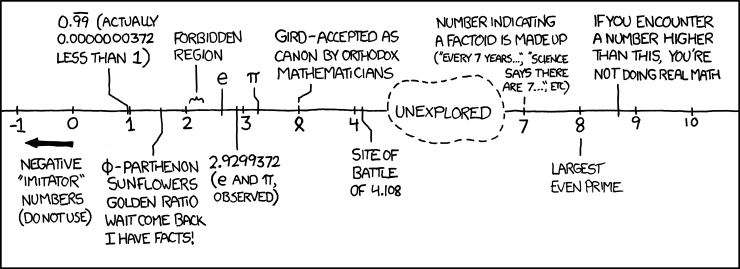
Figure 0.1.3.1. Number Line. (https://xkcd.com/899/